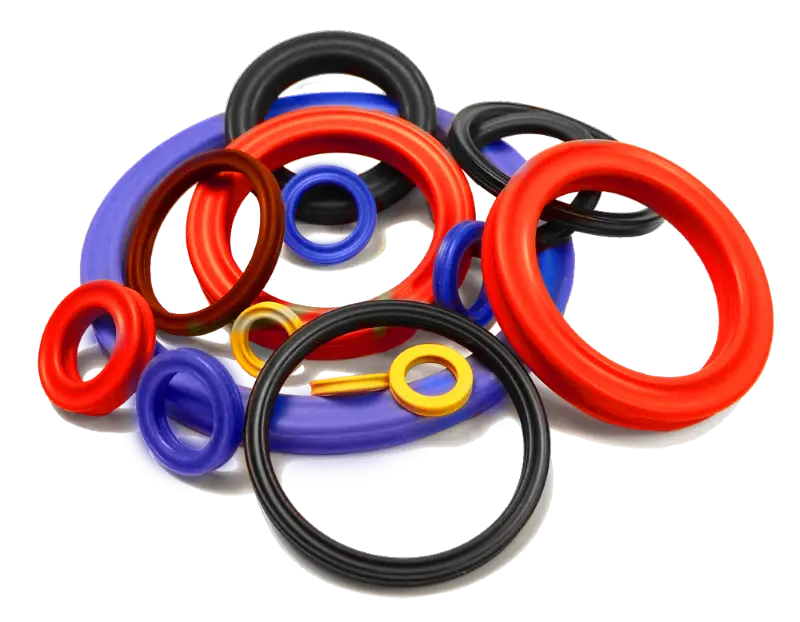
What are colored O-rings?
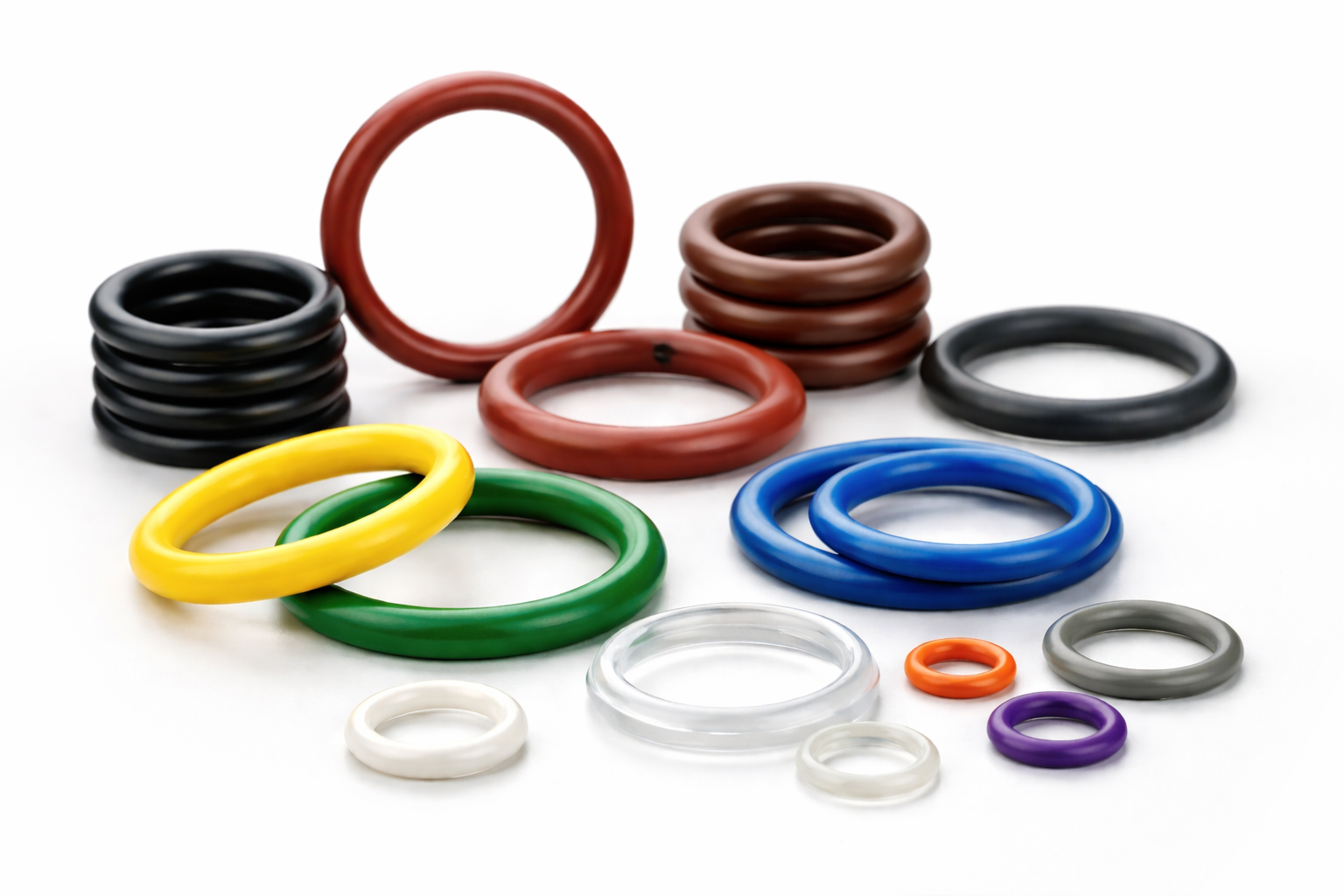
Colored O-rings are O-rings that, in addition to their sealing function, also provide a visual distinction. This makes it easier to quickly select the right ring during assembly, maintenance, or inventory management. Especially in environments where multiple materials or sizes are used side by side, different O-ring colors provide additional clarity.
In practice, color is often used as an aid, but it is not a fixed technical standard. A green, red, or brown O-ring may indicate the material, but the final selection should always be based on the technical specifications of the O-ring.
What do O-ring colors say about the material?
The color of an O-ring can be a useful indication, but it is not conclusive proof of the material. In practice, certain colors are more often associated with specific compounds, but there is no fixed universal standard. This means you can use color as a quick visual indication, as long as you always verify the material technically.
For example, brown and green O-rings are often associated with FKM / Viton®, while red, reddish-brown, and transparent O-rings are regularly found in VMQ Silicone. Blue and purple O-rings are often linked to EPDM, and yellow or grey O-rings are commonly seen in NBR. At the same time, colors may vary by manufacturer, compound, or application. That is why it remains wise never to select an O-ring based on color alone, but always to also consider the material, hardness, and application.
Why choose colored O-rings?
Colored O-rings offer several practical advantages. They make it easier to distinguish compounds from one another, help prevent assembly errors, and provide more clarity in stock and service kits. Especially when many O-rings with similar dimensions are used, color can make a big difference in speed and accuracy.
In addition, O-ring colors are also used for internal coding, product differentiation, and visual finishing. In some applications, a specific color is desired to make assemblies clearer or to better align with internal work processes.
Which colored O-ring is suitable for which application?
You do not choose the right colored O-ring based on color alone, but based on the material and the application. For applications involving oil, fuels, and higher temperatures, FKM / Viton® is often selected, which is regularly found in brown or green. For applications where temperature resistance, flexibility, and UV resistance are important, VMQ Silicone is often used in red, reddish-brown, or transparent.
EPDM, on the other hand, is suitable for water, steam, and weather influences and is regularly available in blue or purple. NBR is a widely chosen material for general industrial applications and is often seen in black, yellow, or grey. For more chemically demanding applications, PTFE and FFKM are also used, often in white.
Colored O-rings in RAL color
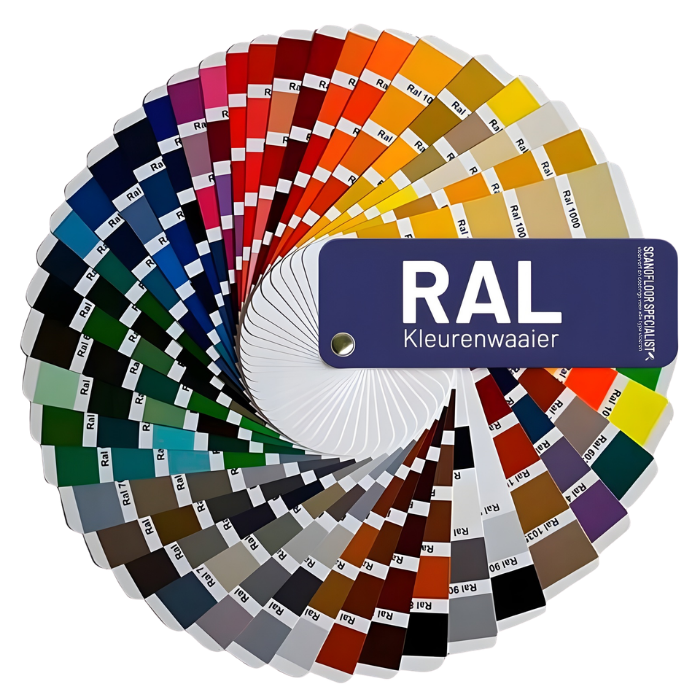
As you have probably noticed by now, not every color is tied to a fixed material type. In many cases, colored O-rings can be specially produced in a desired color. This can be done by using a coating. As a result, custom colors, customer-specific color codes, and popular RAL colors are also possible.
This allows us to supply O-rings in a color that matches your internal coding, product line, or visual preference. Do you work with fixed color standards or are you looking for an O-ring with a specific appearance? In many cases, customization is possible.
Order colored O-rings
When ordering colored O-rings, it is important to first determine which material properties are required. Color then becomes a valuable addition for recognition, coding, and ease of use. In this way, you combine reliable sealing with a practical and well-organized solution.
Are you looking for colored O-rings for a specific application? Then view the range by material and color, or contact us for advice on the right combination of compound, size, hardness, and color.
FAQ
The color of an O-ring is often a useful visual indication, but not a fixed guarantee of the material. Some colors occur more frequently with certain compounds, but checking the material always remains important.
Yes, often as an initial indication. Certain colors are regularly associated with materials such as NBR, EPDM, VMQ silicone, or FKM / Viton®, but this may vary by manufacturer or compound.
FKM / Viton® is often supplied in brown or green. However, other colors are also possible, which is why you should never select an O-ring based on color alone.
No, in practice O-ring colors are not a universal standard. Colors are often used for identification and coding, but they may vary by supplier and application.
Yes, in many cases O-rings can also be produced in a desired or popular RAL color. This is useful for internal coding, product differentiation, or a specific visual appearance.


 Nederlands
  Deutsch
  Français
  Italiano
  Español