

 Nederlands
  Deutsch
  Français
  Italiano
  Español
Table of contents
Applications: O-ring for slurry pumps
Material selection & design criteria: O-ring for slurry pumps
- Chemistry & temperature
- Abrasion, pressure & material selection
Installation, connection & maintenance: O-ring for slurry pumps
- Installation strategy
- Preventive maintenance
- Field connections
FAQ
Applications: O-ring for slurry pumps
In slurry pumps, the O-ring seals static flanges, cover transitions, inspection openings, and sometimes dynamic shaft positions. An O-ring for slurry pumps prevents leakage, stabilizes flow rate, and protects bearings and sealing faces against slurry. With vibrations, varying feed, or short dry running, the O-ring bridges imperfections between metal parts. In mobile applications (slurry tanks, hose wagons), weather and ozone resistance is crucial; outdoor placement and UV require a compound that does not harden quickly. On camlock and Bauer couplings it ensures quick, repeatable leak-free coupling. At pressure peaks or with abrasive particles, higher hardness (80–90 Shore) or a PTFE back-up ring helps. Check groove dimensions (ISO 3601), use a compatible lubricant, and schedule seasonal inspection for compression set and hairline cracks. This way you prevent spills, contamination, and downtime.
Material selection & design criteria: O-ring for slurry pumps
Chemistry & temperature
Slurry is chemically complex (ammonia, organic acids, sulfides) and systems are cleaned after the season. Therefore choose an O-ring for slurry pumps that is demonstrably compatible with the medium and with your cleaning agents. Also pay attention to temperature: winter start-up in frost and summer heat demand resilience.
The right O-ring for slurry pumps retains low compression set and elasticity across the entire operating window, so the seal does not harden prematurely or start crumbling. Document which cleaning procedure you use (temperature, concentration, contact time) and match the material to it.

Abrasion, pressure & material selection: O-ring for slurry pumps
In practice, slurry contains sand and fibers and positive displacement pumps can cause pressure spikes. Therefore assess particle loading, clearance and system pressure. With strong abrasion or generous tolerances, a higher hardness (80–90 Shore) or a PTFE back-up ring pays off, so that the O-ring for slurry pumps does not extrude; in standard situations 70 Shore A is sufficient. Check the groove according to ISO 3601 and consider, at higher pressures, tighter clearances or a harder compound to prevent shearing and edge damage. Material selection is related to this loading: EPDM is often the logical first choice in aqueous, outdoor-installed systems due to its resistance to ozone, UV and many slurry components. For chemically heavier media or higher operating temperatures, FKM (Viton) provides additional margin, while NBR excels in mechanical wear resistance but is more sensitive to ozone and certain chemicals. Match per position: where hot water or steam passes, EPDM performs better; where solvents or oils occur, FKM is more robust. Record choices per pump/location.
Installation, connection & maintenance: O-ring for slurry pumps
Installation & preventive maintenance
Deburr sharp edges, clean the groove and sealing faces, and use a compatible lubricant: silicone grease or green soap with EPDM; acid-free petroleum jelly or silicone grease with NBR. Apply only a thin film, prevent torsion and cutting, position the ring without stress, and close calmly and, where relevant, crosswise. Check that the O-ring does not bulge out of the groove and avoid mineral oils with EPDM. After placement, record size, compound, and hardness. Then plan preventive replacement before the slurry season or at each major service. Inspect for compression set (flattening), hairline cracks, swelling, and discoloration; do not reuse. Store spares cool, dark, and low in ozone, labeled by size and material. At each service, work through a short checklist (size, hardness, lubricant, inspection points) and note findings in the maintenance logbook. With this routine, an O-ring for slurry pumps continues to perform predictably and leak-free, and you prevent failures on busy days. After the test run, check again for weeping along the joint.
Field connections
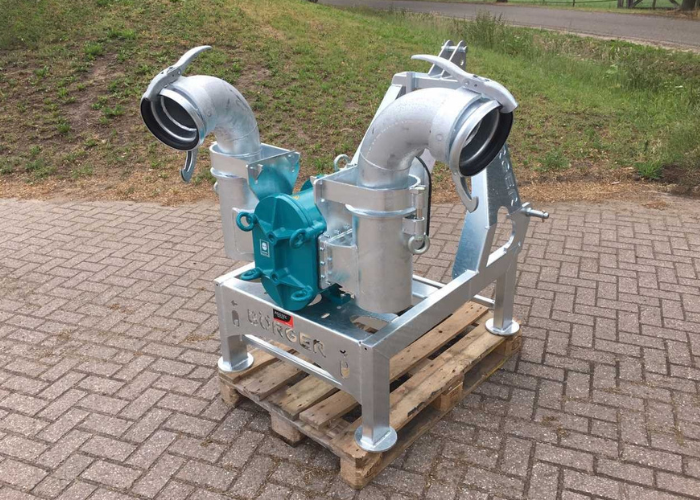
Camlock and Bauer couplings require a reliable seal that is often exposed to the elements. Check fit and tighten crosswise; a little lubricant prevents binding and makes quick changes possible.
Always take a small set of rings and clamps with you in the field. This way an O-ring for slurry pumps also seals leak-free under time pressure, even when hoses are slightly soiled or damp. Check washers and end fittings as well: worn claws or eccentric levers cause leaks faster than the ring itself.
FAQ
EPDM excels in aqueous media and outdoor installation, NBR in mechanical wear resistance, FKM in chemical and thermal resistance. Look at medium, temperature and weather exposure. If in doubt, start with an EPDM O-ring for slurry pumps and evaluate after the season for wear pattern and any chemical attack.
70 Shore A is the practical standard for static seals; choose harder at higher pressure, larger clearances or strong abrasion. In dynamic applications, a slightly softer ring can actually seal better at low pressure, but watch for increased wear.
Yes. A thin, compatible film limits torsion and prevents cutting. Do not use mineral oil with EPDM. With repeated disassembly during the season, a minimal moistening before assembly may already be sufficient.
No. Due to compression set and microcracks they seal worse. New rings prevent failures. Recycle old elastomers if possible via the workshop’s waste stream.