430.000.000+ O-rings in stock
Fast delivery


 Nederlands
  Deutsch
  Français
  Italiano
  Español
FVMQ O-Rings combine excellent chemical resistance with flexibility across a wide temperature range from -60 °C to +200 °C. Designed for demanding static applications, FVMQ O-Rings are the preferred choice in industries like aerospace, vacuum technology, and chemical processing. Their low compression set and gas permeability make them stand out where other materials fail. These seals offer reliable, long-term performance in the most critical environments. Want to learn more? Explore the full details below.
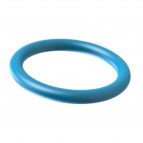
FVMQ O-Rings (also known as Silastic® and fluorosilicone O-rings) combine the flexibility of silicone with the chemical resistance of fluorocarbons. They are designed for applications where extreme temperatures and exposure to fuels or solvents are unavoidable. Thanks to their temperature range of -60°C to +200°C, they remain functional even under harsh conditions. In addition, FVMQ O-Rings also perform well in static applications within the aerospace and chemical industries, where they provide long-term resistance to hot air, fuels and oils. Their compression set and gas permeability are both very low, which makes them ideal for vacuum applications. Although they are less suitable for dynamic loads, they are still a solid sealing solution for critical environments where chemical and thermal resistance are essential.
FVMQ O-Rings are manufactured from fluorosilicone rubber, a synthetic elastomer that merges the best traits of silicone and fluorinated polymers. This material stays flexible at low temperatures while offering excellent resistance to fuels, oils, and solvents. The wide fluorosilicone rubber temperature range of -60 °C to +200 °C and the low gas permeability make them ideal for vacuum systems and chemically aggressive applications. With this combination of temperature and chemical resistance, FVMQ O-Rings remain effective even under continuous thermal stress. Their molecular structure delivers excellent results in industries such as aerospace and chemical processing, where both durability and stability are critical. A properly specified FVMQ oring can outperform conventional materials in static environments.
The unique combination of properties offered by FVMQ O-Rings sets them apart from other elastomers like FKM and EPDM. Compared to standard silicone, they resist fuels and solvents better while retaining flexibility in low temperatures. Compared to FKM, FVMQ O-Rings offer better performance in cold conditions but lower mechanical strength. Unlike EPDM, which breaks down when exposed to fuels and oils, these o-rings handle these environments with ease. This makes them an ideal choice in applications where fluorosilicone rubber provides the right balance of chemical resistance and low-temperature flexibility.
FVMQ O-Rings provide three key benefits that make them ideal for demanding scenarios. First, they have an impressive temperature range, staying flexible and reliable between -60 °C and +200 °C. This makes them perfect for extreme temperature conditions. Second, their chemical structure offers strong resistance to fuels, oils, and solvents, making them safe in corrosive environments. last but not least, they maintain a low compression set. This ensures sealing performance over time. For static applications in aerospace, chemical industries, and vacuum systems, the fvmq oring proves to be both reliable and long-lasting. Despite its high price, this is offset by its excellent quality and benefits.
The FVMQ O-Ring performs within a broad fluorosilicone rubber temperature range of -60 °C to +200 °C, making them suitable for extreme cold and heat. Unlike many other elastomers, FVMQ O-Rings retain flexibility and shape even during sudden temperature shifts or repeated thermal cycles. These thermal properties are especially valuable in sectors such as aerospace and chemical processing, where components are often exposed to fluctuating temperatures. In such environments, a properly designed fvmq oring offers consistent sealing without loss of elasticity or performance.
One of the standout features of FVMQ O-Rings is their ability to resist aggressive media such as oils, fuels, solvents, and various gases. Even under long-term exposure, they maintain their structure and sealing capability. This makes them superior to many conventional sealing materials. Thanks to their specialized formulation, fluorosilicone o rings remain stable in chemically demanding environments like reactors or fuel systems. In such cases, an o ring fvmq offers both safety and longevity where standard rubbers would fail.
FVMQ O-Rings are known for their low compression set, meaning they can retain their original shape and sealing function over time. This feature is critical in applications like vacuum systems and fuel sealing, where long-term reliability is key. Even when subjected to constant static loads or thermal cycling, these fvmq oring components remain effective. Their low gas permeability combined with shape stability makes them a trusted choice for engineers aiming to reduce maintenance and improve uptime.
Despite their impressive chemical and thermal properties, FVMQ O-Rings have some limitations. Compared to other elastomers like FKM or HNBR, they have lower mechanical strength and are more susceptible to tearing or abrasion. This makes fluorosilicone rubber less ideal for dynamic applications involving high friction or tensile loads. Additionally, they are more expensive due to the complexity of the material and the need for specialized tooling. Still, in static settings where thermal and chemical resistance is a priority, a fluorosilicone o ring often justifies the cost.
While the FVMQ O-ring offers excellent resistance to thermal and chemically aggressive conditions, their mechanical durability is limited. They have relatively low wear resistance and tensile strength, making them more susceptible to cracking under mechanical stress. As a result, FVMQ O-rings are not well-suited for dynamic environments involving motion, friction, or stretch. In systems with significant mechanical loads, alternative materials such as FKM or HNBR are often a better fit. However, the aflas o-rings remain a reliable sealing solution in static chemical settings where environmental resistance outweighs mechanical demands.
A key drawback of FVMQ O-Rings is their higher production cost compared to standard materials like silicone or nitrile rubber. The specialized composition of fluorosilicone rubber offers excellent resistance but requires more complex manufacturing processes. In some cases, custom molds or specific tooling are needed, which increases upfront investment. Still, when system reliability and material longevity are priorities, an o ring fvmq provides long-term value that justifies the cost — especially in demanding static sealing scenarios.
FVMQ O-Rings are widely used in industries that require both chemical and temperature resistance. With operating ranges from -60 °C to +200 °C and strong resistance to fuels, oils, and solvents, they are well suited for the aerospace sector. There, they are typically used in static seals within fuel systems and engine components. In chemical processing, they are applied in static sealing of equipment exposed to aggressive media. Their low gas permeability also makes them excellent for vacuum technology. Whether you're sealing for pressure, protection, or precision, a well-chosen fvmq oring will perform reliably over time.
FVMQ O-Rings are frequently used in the aerospace industry due to their ability to withstand fuels such as kerosene, synthetic oils, and solvents. Their flexibility and sealing performance remain stable even under extreme temperatures, pressure variations, and exposure to aggressive fluids. In static sealing applications such as fuel system connections, engine housings and control units, they provide reliable long-term performance. Their low gas permeability and chemical resilience make them ideal components in aircraft and spacecraft design, especially in systems where both weight and reliability are critical.
In industrial environments, FVMQ O-Rings are used in sealing components exposed to chemicals, high heat, or vacuum pressure. Typical applications include chemical processing equipment, analytical devices, vacuum pumps, and thermal enclosures. Their consistent performance within the full temperature range ensures safe operation even in highly reactive or thermally unstable systems. These O-Rings help engineers minimize leaks, reduce downtime, and maintain system integrity. Whether in a pharmaceutical lab or a petrochemical plant, o ring fvmq components offer a reliable sealing solution where conventional rubbers cannot endure.
FVMQ O-Rings are the right solution when both chemical resistance and thermal stability are essential. Their consistent performance within the full temperature range, combined with resistance to fuels, oils, and solvents, makes them ideal for static sealing in harsh industrial environments. While not suitable for dynamic applications with high mechanical stress, their unique material structure ensures long service life and reliability where many other elastomers fall short. In aerospace, chemical systems, and vacuum applications, an o ring fvmq offers proven durability and consistent sealing where it matters most.
FVMQ, or fluorosilicone rubber, is also known as fluorovinylmethylsiloxane rubber. In the market, you may also come across the brand name Silastic®.
.webp)

.webp)