

 Nederlands
  Deutsch
  Français
  Italiano
  Español
Table of contents
- Materials: which material to use where in a coffee machine?
- Certifications and regulations
- Technical properties
- Maintenance of O-rings in coffee machines
- What to do if the coffee machine leaks?
- FAQ
Materials: which material to use where in a coffee machine?
Not every O-ring is the same. The choice of material determines how well the ring withstands heat, steam, coffee oils, and cleaning agents.
- EPDM is by far the most commonly used material in coffee machines. It is excellently suited to hot water and steam, making it ideal for boiler and water circuits. The material is highly resistant to hydrolysis and temperature fluctuations.
- Silicone (VMQ) is widely used because of its flexibility and food safety. This material remains elastic under varying temperatures and is therefore suitable for static seals in the brew group or at connections. However, silicone wears more quickly in moving applications.
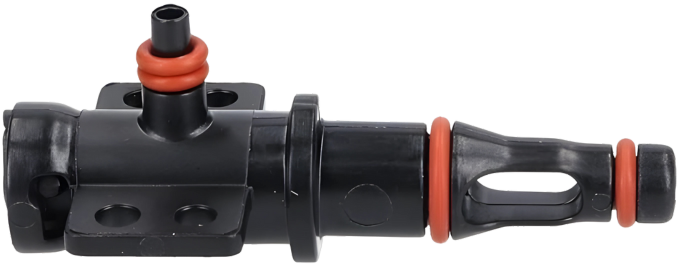
Certifications and regulations for O-rings in coffee machines
Because O-rings in coffee machines come into direct contact with drinking water and food products, material certification is essential. The following certifications are most relevant:
- EC 1935/2004 (Europe): The European framework regulation for materials in contact with food. Mandatory for all food-contact O-rings sold in the EU.
- FDA 21 CFR 177.2600 (USA): The US Food & Drug Administration standard for rubber materials in contact with food. Required for export to the American market.
- NSF / ANSI 61 (Drinking Water): Certifies that materials do not leach harmful substances into potable water. Relevant for machines connected to a water supply.
- WRAS (UK): The Water Regulations Advisory Scheme, the UK equivalent for drinking-water contact materials.
- KTW (Germany): Particularly relevant for machines sold in Germany, Austria, and Switzerland.
All O-rings supplied by O-Ring-Stocks for food and drinking-water contact applications carry the relevant certifications. Material datasheets and certificates are available on request.
Technical properties
When choosing O-rings, both chemical and mechanical properties play a role. An important point is the temperature range. EPDM typically performs up to 120–150 °C and is therefore very suitable for hot water and steam. Silicone is often usable up to around 200 °C and retains its elasticity even with strongly fluctuating temperatures. In addition, compression set is an important factor: over time, O-rings can lose their resilience due to constant pressure and heat. This largely determines service life. Wear resistance also matters, especially in dynamic applications such as the brew group. Here the material must withstand friction and mechanical loading.
Maintenance of O-rings in coffee machines
For proper coffee machine maintenance, regular inspection of O-rings is essential. Inspect them at least annually and replace them at the first signs of wear such as small cracks, drying out, or deformation. With intensive use, such as in an office environment, more frequent replacement may be necessary.
As a general guideline: replace O-rings every 1 to 2 years for home use, or every 6 to 12 months in office or intensive-use environments. For example Jura machines, brew group O-rings typically need replacement every 12 to 18 months, in line with Jura's own recommended maintenance intervals. In the brew group, wear occurs faster than elsewhere in the machine due to the constant mechanical stress of each brewing cycle.
Always use food-grade silicone grease to lightly lubricate O-rings during installation. This reduces wear, prevents drying, and ensures smooth assembly. Make sure the lubricant is suitable for potable-water and food-contact applications.
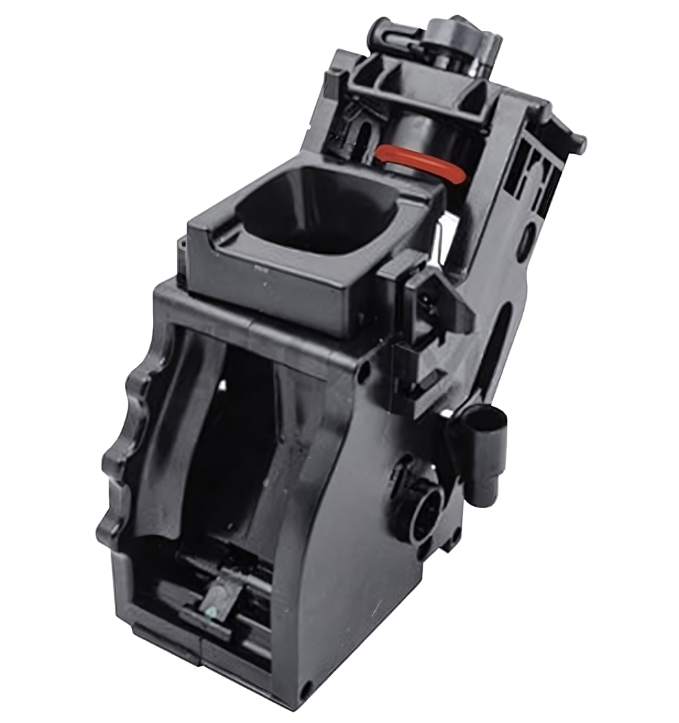
What to do if the coffee machine leaks?
A common complaint is that a coffee machine leaks. Often a worn O-ring is the culprit. Water droplets under the appliance, loss of pressure, or wet coffee pads can all be warning signs. By replacing the relevant O-ring and lubricating it correctly, the problem is usually solved quickly.
Common symptoms of worn O-rings in a coffee machine:
- Water leaking under the machine (most common, often the boiler or pump connection)
- Loss of brewing pressure or slow coffee flow
- Wet coffee pads or grounds
- Deteriorating coffee taste
- Visible steam or moisture around hose connections
- Error codes on machines such as Jura, triggered by pressure or leakage issues
In most cases, replacing and correctly lubricating the relevant O-ring solves the problem quickly.
Even when people search for things like “Philips coffee machine leaks water” or “Jura coffee machine maintenance,” the solution often turns out to be universal: check and replace the sealing rings. Whether it’s a domestic fully automatic or a professional machine, the way the seals work remains the same.
FAQ
The most common symptoms are: water leaking under the machine, loss of brewing pressure, wet coffee pads, deteriorating coffee taste, and moisture around hose connections.
Yes, usually. With the right size, a suitable replacement ring, and some food-grade silicone grease, this can be done easily at home.
Replace O-rings every 1 to 2 years for home use. For office or intensive use, inspect every 6 to 12 months. The brew group O-rings wear fastest due to constant mechanical stress.