

 Nederlands
  Deutsch
  Français
  Italiano
  Español
Inside a centrifuge, O-rings in pharmaceutical centrifuges are located at critical points: between the lid and chamber, around outlet flanges, and at tri-clamp connections. In these areas, they must not only seal but also withstand pressure, vibration, and cleaning chemicals. In modern designs, every contact surface is finely polished to minimize the risk of residue formation or bacterial growth. When a lid is opened and re-tightened dozens of times per week, a compression set O-ring may lose sealing force over time. Regular inspection and timely replacement of worn parts are essential to maintain the reliability of the O-rings.
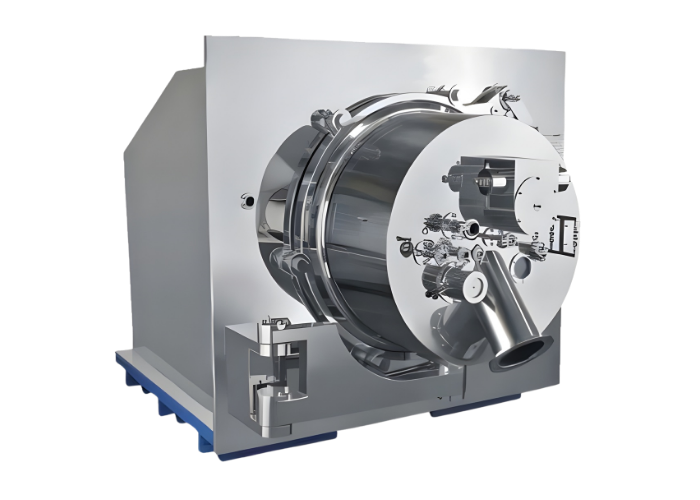
Hygienic design is inextricably linked with O-rings in pharmaceutical centrifuges. Especially the transition between metal parts requires a perfect fit. A groove with an overly sharp finish can damage the O-ring surface during assembly, which later leads to microleakage. A well-designed gland with rounded edges and controlled roughness (Ra < 0.8 µm) prevents that issue. In clean-in-place systems, CIP-resistant O-rings are exposed to alkaline cleaning agents at 80 °C or higher. During steam sterilization, SIP steam-sterilization O-rings must also withstand short-term temperatures above 130 °C without loss of shape. This requires precise material selection and process knowledge.
Not every rubber compound behaves the same under pharmaceutical conditions. O-rings in pharmaceutical centrifuges are therefore made from carefully selected materials, each with its own strengths and weaknesses. A pharmaceutical EPDM O-ring excels in resistance to steam, hot water, and oxidative cleaning agents. An FKM Viton® chemical-resistant O-ring performs excellently in contact with solvents and acids but hardens under prolonged steam exposure. An NBR oil- and grease-resistant O-ring remains useful in auxiliary systems with lubricating grease or hydraulic oil, although it is less suitable for CIP media. The platinum-cured silicone O-ring offers flexibility at low temperatures but is more prone to swelling in solvent-rich processes. By matching these properties precisely to the process medium, the O-rings remain functional even under extreme cycles.
Seals that come into contact with pharmaceutical products must comply with international safety standards. Therefore, O-rings in pharmaceutical centrifuges are often supplied with FDA 21 CFR 177.2600 compliant and USP Class VI O-ring certification. These classifications confirm that the compounds used do not release harmful extractables and that they are suitable for use in sterile production environments. In validation documentation, these certificates are linked to batch numbers to maintain full traceability. Thanks to such approvals, operators can rely on their O-rings to contribute to product safety and meet the strictest regulations within the pharmaceutical industry.


To ensure reliable sealing, O-rings in pharmaceutical centrifuges are produced and measured according to ISO 3601 O-ring tolerances and DIN 3771 O-ring sizes. These standards specify cord diameters, squeeze percentages, and tolerances needed for a stable sealing force. Too little squeeze can cause leakage; too much squeeze accelerates ageing and increases the risk of cracking. A good design accounts for a volumetric fill of 75 % and a groove width that compensates for thermal expansion. During maintenance, the compression set O-ring is checked, as permanent deformation is the first sign of material fatigue. Documentation of batch numbers and certificates is standard for validation of O-rings in pharmaceutical centrifuges.
Reliable performance requires not only the right material but also correct installation. During installation of O-rings in pharmaceutical centrifuges, approved lubricants compatible with the process medium are often used. Too dry an installation can cause friction, while unsuitable greases can lead to swelling or delamination. In practice, EPDM seals are usually installed dry, while FKM variants are lightly lubricated. After each maintenance cycle, the O-ring is visually inspected for cracks, loss of gloss, or flat spots. By applying this routine consistently, the reliability of O-rings in pharmaceutical centrifuges remains high, even with hundreds of CIP and SIP cycles per year.
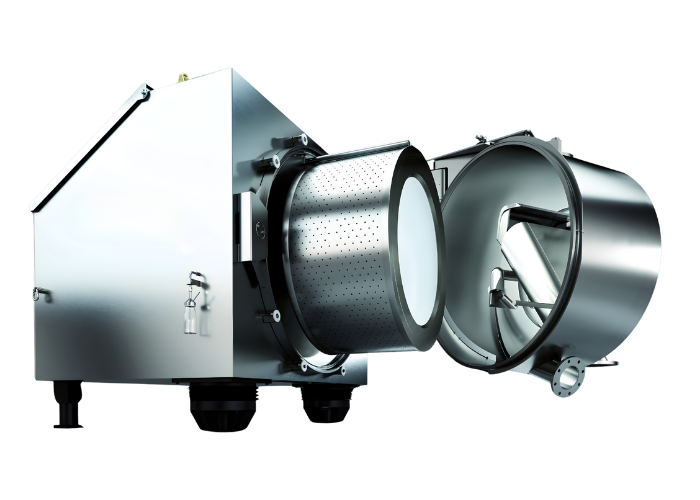
A pharmaceutical EPDM O-ring offers the best resistance to prolonged steam and high temperature. As a result, the seal in O-rings in pharmaceutical centrifuges remains reliable, even with repeated sterilization.
When an O-ring shows flat contact surfaces or does not spring back, this indicates an increased compression set O-ring and it should be replaced.
These certifications demonstrate that O-rings in pharmaceutical centrifuges do not release substances that could affect product quality.
Depending on the number of CIP/SIP cycles and chemical exposure, usually after 6 to 12 months, or earlier if visual damage is observed.
Yes, provided the pigments are fully FDA- and USP Class VI–approved and support visual inspection.