

 Nederlands
  Deutsch
  Français
  Italiano
  Español
Table of contents
- O-rings for pneumatic cylinders: applications
- O-rings for pneumatic cylinders: material selection
- O-rings for pneumatic cylinders: maintenance & service life
- O-rings for pneumatic cylinders: hygiene & certification
- FAQ
O-rings for pneumatic cylinders: applications
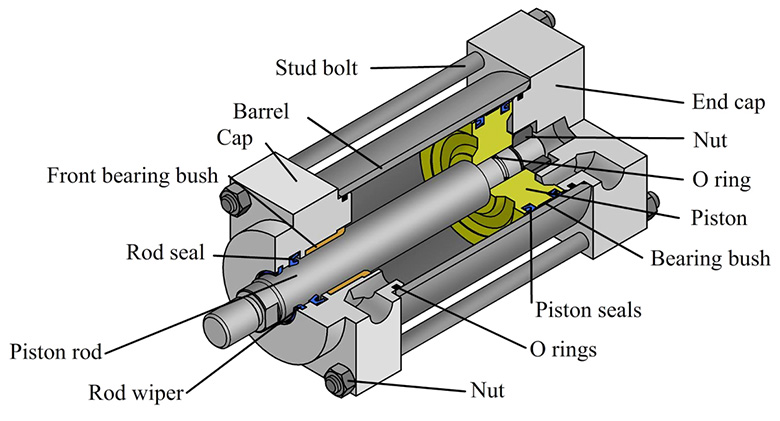
In the piston, O-rings act as dynamic seals that separate the pressure chambers and ensure a leak-free stroke. This is the most heavily loaded position: the seal moves, is exposed to pressure changes and determines repeatability. Here, friction and the lubricating film make the difference between a consistent cycle time and stick-slip that disrupts the entire production cycle.
Between the cylinder tube and end cap and at port connections, O-rings for pneumatic cylinders prevent bypass and the unwanted entry or escape of fluids. Examples include static seals at end caps, plugs and manifold interfaces. In food environments, it is especially important that the groove is designed without dead corners and is easy to rinse. This prevents residues of product and cleaning agents from remaining and keeps the microbial risk low.
O-rings for pneumatic cylinders: material selection
For CIP/SIP, select EPDM O-rings for pneumatic cylinders with high steam resistance. EPDM retains its elasticity under heat and water vapour, generally offers good resistance to alkaline and acidic cleaning agents and provides stable compression over a long period in this context. This keeps the preload consistent and the sealing performance reliable, even when the production line is washed or sterilised daily.
Where fats, oils or lubricated compressed air are involved, FKM O-rings are often the better choice. FKM offers excellent resistance to oily media and many chemicals, while also providing a broad temperature range. Where chemical inertness and low friction are the main priorities, a PTFE solution may be appropriate, such as a PTFE-encapsulated ring or a PTFE seal with an elastic energizer. These solutions reduce sticking, keep friction low and minimise the risk of material transfer to the product.
Material selection involves more than a simple list of what is compatible and what is not. Hardness, compression set and behaviour during thermal cycles must also be considered. A compound with low compression set prevents the seal from becoming fatigued after many hours under compression. Lubricant compatibility is also important, as some elastomers swell when exposed to certain lubricants. By considering these factors, O-rings for pneumatic cylinders become reproducible components within the process rather than a variable.
O-rings for pneumatic cylinders: maintenance & service life
Plan maintenance based on data rather than instinct. Replace O-rings for pneumatic cylinders preventively based on cycles, switching movements and recorded CIP hours. By establishing machine-specific thresholds for each type of equipment, maintenance shifts from reactive to predictable. This shortens shutdowns and prevents an apparently minor leak from gradually causing compressed-air losses and quality issues.
During inspections, it is important to look beyond whether leakage is present or not. Check the O-rings for flattened areas caused by prolonged compression, cracks after steam cycles and swelling caused by unsuitable media. Also inspect the groove, as burrs or sharp transitions can cut into the seal during installation. A small investment in chamfering and polishing quickly pays for itself through a longer service life and fewer unexpected failures.
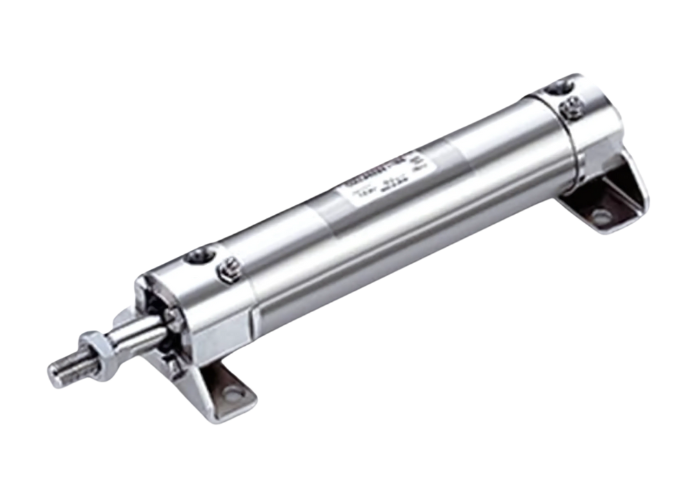
Lubrication requires separate attention. A thin, food-grade lubricating film reduces friction and dampens stick-slip, but must not compromise cleanability. Consider wipers or double scrapers to keep water and dirt away from the rod. During cleaning, it is advisable to extend the rod. This reduces water ingress past the wiper and protects the O-rings for pneumatic cylinders against moisture penetration. Finally, use traceable batches and record replacement dates. This makes it possible to identify correlations with failures or recipe changes.
O-rings for pneumatic cylinders: hygiene & certification
Documentation is just as important as the material itself. Use O-rings for pneumatic cylinders with current FDA and EC 1935/2004 declarations and, where relevant, ensure compliance with GMP (EC 2023/2006), USP Class VI or 3-A. Request compound codes and batch certificates to maintain complete audit trails. In aseptic processes, it is worthwhile including validation data in the change-control process to prevent unexpected issues during requalification.
Select O-rings for pneumatic cylinders made from compounds that comply with FDA and EC 1935/2004, such as EPDM, FKM or PTFE solutions available from O-Ring-Stocks. Combine this with a hygienic groove design: rounded transitions instead of sharp internal corners, good drainage and a flushable surface. The correct hardness, often 70 Shore A, balances sealing force and cleanability while limiting the risk of cold flow in plastic housings. At higher pressure differentials or larger clearances, PTFE back-up rings prevent extrusion. This makes sealing not only a technical choice, but also a food-safe one.
FAQ
EPDM O-ring for CIP/SIP and steam; FKM O-ring for contact with oil/grease; PTFE O-ring (or PTFE seal with energizer) for chemical inertness and low friction.
Use compounds with FDA and EC 1935/2004 declaration; ensure GMP (EG 2023/2006), and where appropriate USP Class VI plus batch/lot certificates for traceability.
Choose a compound with low compression set and approx. 70 Shore A hardness, apply hygienic groove design and use a thin food-grade lubricating film; use wipers/double scrapers against water and dirt.
Set intervals in a data-driven way based on cycles/actuations and CIP hours; inspect for flat spots, swelling, and cracks, and replace preventively to avoid unexpected downtime.