

 Nederlands
  Deutsch
  Français
  Italiano
  Español
Role of O-rings in corrosive pump environments
In metering, centrifugal and positive displacement pumps, O-rings in pumps for corrosive media form the barrier between the medium and the mechanical components. They must prevent aggressive substances such as acids, alkaline solutions or chlorine-containing liquids from penetrating bearings or sealing surfaces. From a design perspective, the aim is to achieve an optimal balance between elastic deformation and chemical stability.
When the O-ring retains its shape while remaining resistant to the pH value and temperature of the medium, the pump continues to operate without leakage. These seals therefore play a decisive role in the operational reliability of installations used for drinking water and wastewater treatment.
Material selection for chemically resistant O-rings
Selecting the correct sealing material is crucial. O-rings in pumps for corrosive media are often manufactured from EPDM, FKM (Viton®) or NBR, depending on the composition of the pumped medium. EPDM is ideal for aqueous solutions, weak acids and alkaline media and complies with drinking water standards such as WRAS and KTW. FKM, by contrast, offers exceptional resistance to strong chemicals, oils and oxidising substances. For applications in sludge or wastewater installations, NBR remains popular because of its wear resistance and oil resistance. By selecting the correct combination of elastomer, hardness and compression, these seals retain their sealing performance even under fluctuating pressures and temperatures, which is essential for long-term process reliability.
Standards and certifications for water and wastewater pumps
Strict requirements concerning safety, hygiene and durability apply in water treatment. O-rings in pumps for corrosive media are therefore manufactured according to international standards such as ISO 3601. This standard describes exact tolerances, surface roughness values and dimensions, ensuring that seals perform consistently and reliably in use. Drinking water installations also frequently require KIWA, WRAS, ACS or KTW certification, which guarantees that the material does not release harmful substances into the water. By selecting O-rings with these certifications, pump installations not only comply with legal requirements, but also minimise the risk of leakage, material ageing or microbial growth within the sealing areas.



Sealing problems and practical examples
Typical causes of leakage in chemical pumps
In practice, many problems are caused by incorrect material selection or improper installation. O-rings in pumps for corrosive media may swell, crack or deteriorate when exposed to chemicals for which they were not designed. Excessive compression or incorrect groove dimensions also frequently cause extrusion or deformation. EPDM rings, for example, are regularly used incorrectly in applications involving oils or chlorine-containing solvents, which significantly reduces their service life. By combining a correct fit and compatibility analysis with preventive maintenance, operators can prevent many of these problems and substantially extend the service life of the pump.
Solutions and material selection in treatment plants
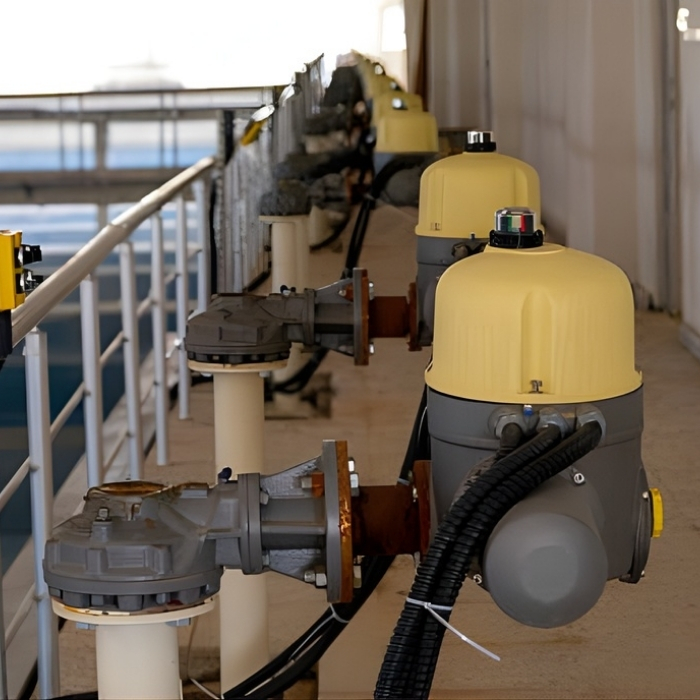
In modern treatment plants, O-rings in pumps for corrosive media are used under a wide range of conditions, from oxygen-rich aeration systems to aggressive sludge flows at high temperatures. FKM or Viton® is often selected because of its resistance to oxidation and chemicals, while EPDM remains suitable for neutral or mildly alkaline flows. Silicone seals are also used in metering pumps for chlorine or ozone, where flexibility and purity are the main priorities. In practice, the correct material combination, matched to the medium, pressure and temperature, can reduce maintenance frequency by as much as 40%. High-quality O-rings therefore contribute directly to the efficiency and durability of the installation.
Applications
|
Application type |
Medium/environment | Recommended O-ring material | Key properties | Certifications |
|
Drinking water pumps |
Neutral to mildly alkaline water | EPDM O-ring for water treatment |
Excellent resistance to water and ozone, suitable for drinking water |
WRAS, KTW, ACS, KIWA |
|
Metering pumps |
Chlorine or alkaline solutions | Silicone O-ring for drinking water | High purity, flexible at low pressure | FDA, WRAS |
| Wastewater pumps | Sludge, contaminated water containing oils | NBR O-ring for wastewater | Oil-resistant and wear-resistant, suitable for mixed media | x |
| Chemical feed pumps | Acids, oxidising agents, solvents | FKM O-ring / Viton O-ring | High chemical resistance, temperature-resistant | x |
| Aeration systems | Oxygen-rich air, ozone | EPDM O-ring for water treatment | Resistant to ozone and ageing | WRAS, KTW, KIWA |
| Hot-water circulation | 70 - 90 °C process water | FKM O-ring for corrosive liquids | Temperature-resistant and durable | x |
FAQ
EPDM, FKM (Viton®) and Silicone are the most commonly used materials due to their chemical resistance and temperature range.
Watch for deformation, sticky residues, or micro-cracks. These signs indicate ageing or incompatibility with the medium.
Yes, provided they comply with standards such as WRAS or KTW. EPDM is generally the best choice for this.
This standard ensures consistent dimensions, reducing leakage and assembly damage.
That depends on the medium, temperature and pressure, but preventive replacement after 12 to 18 months is common.