

 Nederlands
  Deutsch
  Français
  Italiano
  Español
Table of contents
- O-ring flange sealing in the chemical industry
- Materials for O-ring flange seals: FKM, FFKM, EPDM and PTFE
- Installing an O-ring in a flange connection: step-by-step guide and tips
- O-ring maintenance and inspection checklist for flanges
- FAQ
O-ring flange sealing in the chemical industry
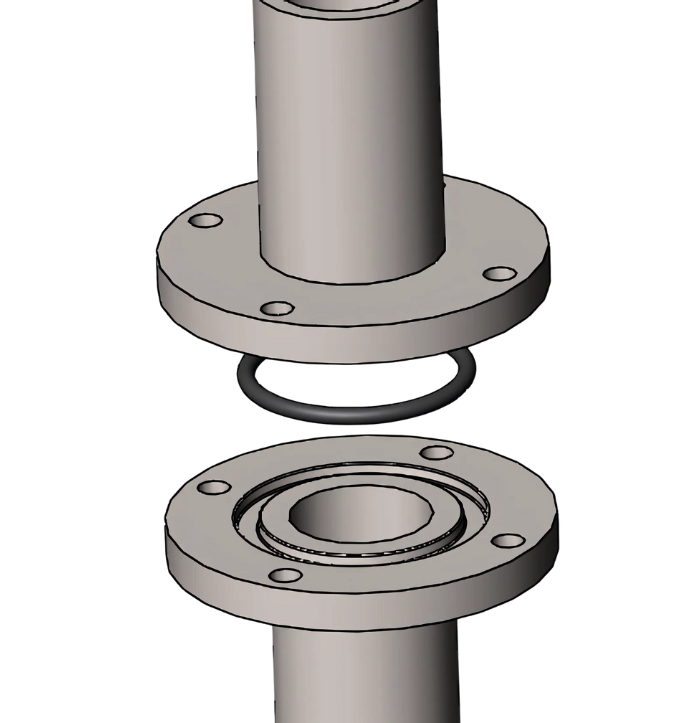
In piping systems, reactors, heat exchangers, pumps and valves, an O-ring flange seal must remain reliable under thermal fluctuations and pressure cycles. Unlike flat gaskets, this solution requires less bolt force and compensates for minor surface irregularities through elastic recovery. The result is a stable seal and a lower risk of leakage, even when the flange connection is opened more frequently for inspection or cleaning. By choosing an O-ring flange seal at an early stage, you benefit from compact groove geometry and easy replacement during shutdowns. For processes involving solvents, acids or steam, the next step is to select a compound and hardness that match the medium, temperature and pressure, ensuring that the O-ring flange seal retains its compression even after many cycles.
Materials for O-ring flange seals: FKM, FFKM, EPDM and PTFE
The choice of material determines service life and safety. Start with the application and work back to the material: FKM (Viton) performs well with fuels and many solvents and withstands higher temperatures; FFKM offers maximum chemical resistance in demanding media; EPDM performs well in water, steam and outdoor installations; PTFE is inert and suitable for fully static flanges. Use this as a quick shortlist for a durable O-ring flange seal.
Also assess O-ring materials in terms of hardness (Shore A), swelling, gas permeation and thermal ageing. In corrosive processes, chemically resistant O-rings form the basis. For highly aggressive media such as acids and alkalis, specifically select chemically resistant O-rings for acids and alkalis, for example in FFKM or certain FKM compounds with proven resistance. Combine this material selection with supplier testing and part-to-part consistency so that the O-ring flange seal performs predictably in batch and continuous processes.
Installing an O-ring in a flange connection: step-by-step guide and tips
Proper O-ring installation begins with clean, burr-free surfaces and an undamaged groove. Apply a thin layer of compatible lubricant to prevent friction and twisting. Place the ring in the groove without stretching it, close the flanges and tighten the bolts crosswise and in stages. This basic approach makes the O-ring flange seal leak-tight and reproducible from the outset.
Base the groove geometry on O-ring groove dimensions and compression in accordance with ISO 3601/AS568: insufficient squeeze causes microleakage, while excessive squeeze accelerates ageing. Where necessary, use dimensionally stable back-up rings to prevent extrusion. At higher pressures, a high-pressure flange seal with an O-ring and back-up ring is the best solution for controlling extrusion gaps and keeping the O-ring flange seal stable during pressure fluctuations.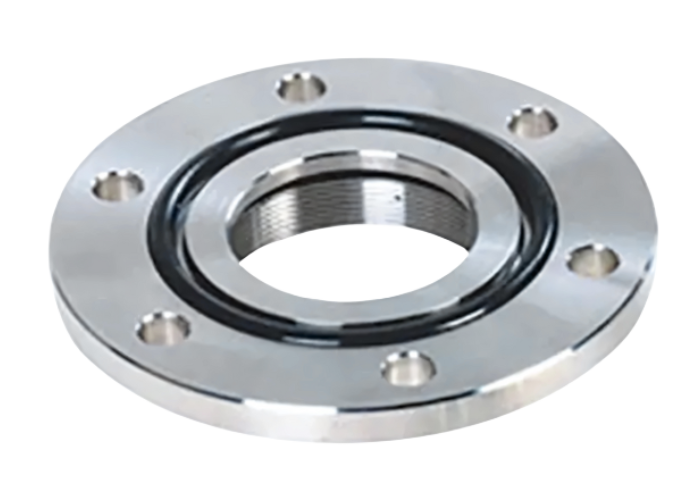
Also pay attention to “Surface roughness and tightening torque for a leak-tight O-ring flange”. A finish that is too rough or too smooth can undermine the seal, while an incorrect tightening torque causes uneven loading. Therefore, record tightening torques in maintenance procedures and train technicians to recognise twisting. This keeps the O-ring flange seal predictably leak-tight, even after maintenance work. In summary, careful O-ring installation and validation prevent unexpected problems during start-up.
O-ring maintenance and inspection checklist for flanges
Make O-ring maintenance a routine procedure. During shutdowns, check for compression set (flattening), cracks, discolouration and increased hardness. Replace the O-ring preventively when in doubt and record the medium, process conditions and operating time. This data indicates when the O-ring flange seal is approaching its limits. Also check the compatibility of cleaning agents with the selected elastomer.
Many incidents can be prevented from recurring. Common mistakes with O-ring flange seals, and how to prevent them, often include selecting the wrong compound for the medium, incorrect groove geometry, failing to use a back-up ring at high pressure, installing the O-ring dry or skipping crosswise tightening. Maintaining suitable storage conditions, meaning cool, dark and low in ozone, and using spare parts according to the FIFO principle help keep the O-ring flange seal consistently reliable over the long term. By systematically planning O-ring maintenance, both leakage reports and unplanned shutdowns are reduced.
FAQ
Start with FKM and assess the fluid specifications; for the most severe media, FFKM is often the safest choice. For fully static flanges, PTFE can be a solution, provided you design the groove for it so that the O-ring flange seal retains its shape.
ISO 3601 and AS568 govern dimensions and tolerances; NORSOK M-710 focuses on performance in oil and gas environments, including explosive decompression. Following these references accelerates procurement and audit processes.