

 Nederlands
  Deutsch
  Français
  Italiano
  Español
Table of contents
Application of O-rings in heat exchangers within power plants
Heat exchangers in power plants process water, oil, glycol and condensate at varying temperatures. O-rings are used in inspection covers, sensor connections, drain plugs, flange transitions and piping systems. Their primary task is to separate fluids without leakage or contamination, even during repeated thermal expansion and cooling. In plate heat exchangers (PHE), O-rings are often installed in sealing plugs, piping assemblies and measurement points. They must be resistant to hot water, glycol and cleaning agents. EPDM is preferred here because of its excellent resistance to water and steam. In circuits containing oil or operating at higher temperatures, FKM (Viton®) may provide better results.
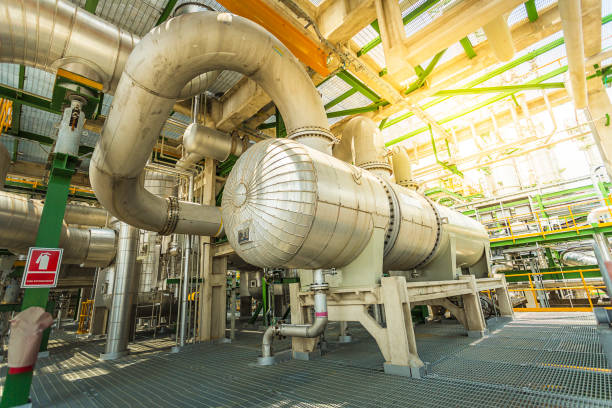
PHE and S&T: differences in load conditions
In shell-and-tube heat exchangers (S&T), O-rings are located in end covers, tube bundle seals and instrumentation ports. Pressure levels can be considerable, which is why harder compounds of 80–90 Shore A are often used. These are combined with PTFE back-up rings to prevent extrusion under high pressure. In both types of heat exchanger, the seals must withstand thermal cycles and pressure variations without losing their elastic properties.
Material selection: EPDM, FKM (Viton®) and FFKM in heat exchangers
Properties of the main compounds
Material selection largely determines the service life and reliability of O-rings in heat exchangers. Each elastomer has specific advantages and disadvantages depending on the medium, temperature and cleaning method. EPDM offers excellent resistance to hot water, demineralised water and steam. It remains elastic up to approximately 150 °C and provides good resistance to oxidation and ozone. FKM (Viton®) is ideal for oil circuits, lubricating oil coolers and systems containing chemically aggressive media. It remains stable up to approximately 200 °C, but is less suitable for prolonged steam applications. FFKM is the premium choice for extreme temperatures and aggressive chemicals. It combines the chemical inertness of PTFE with the elasticity of rubber, but is more expensive.
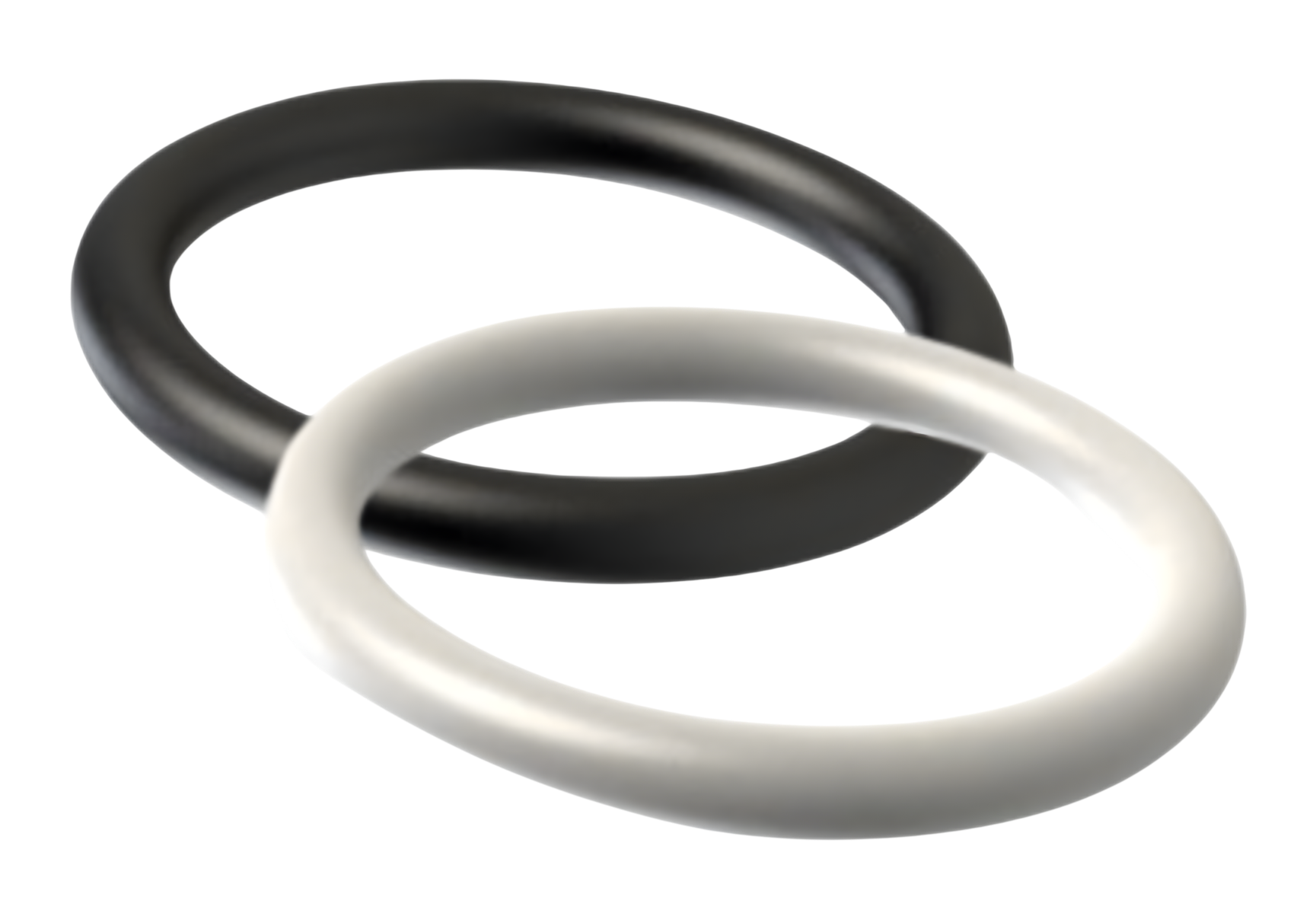
Compatibility with process media
Water and steam cause NBR to age rapidly, making EPDM the preferred choice in water-side circuits. FKM (Viton®) performs better in oil-cooled heat exchangers or closed hydraulic systems. FFKM is mainly used in critical instrumentation circuits or test facilities where absolute leak-tightness and cleanliness are required. Correct material selection ensures that the O-ring resists not only chemical influences, but also repeated compression and expansion during operation.
Technical design: groove dimensions, tolerances and PTFE back-up rings
Groove design and tolerances according to ISO 3601
Even the best material will fail in a poor design. Correct groove geometry, coordination of squeeze and stretch and the proper use of supporting rings determine whether an O-ring retains its function. The ISO 3601 standard describes the tolerances for O-ring dimensions, groove depths and compression percentages. A correctly designed groove according to ISO 3601 ensures that O-rings in heat exchangers retain their sealing properties, even during prolonged pressure changes and temperature fluctuations. Static applications generally use 15–25% squeeze, with a groove fill of approximately 80%. Excessive compression causes deformation and shortens service life, while insufficient compression can cause leakage. The roughness of the sealing surface must prevent microleakage without increasing friction. A finish that is too rough or too smooth may prevent O-rings in heat exchangers from sealing optimally, particularly when pressure and temperature vary continuously.
Application of PTFE back-up rings
PTFE back-up rings are used at higher system pressures or with wider extrusion gaps. These rigid rings support the O-ring and prevent the elastomer from being forced into the gap, which causes extrusion. Under demanding operating conditions, these constructions prevent O-rings in heat exchangers from wearing prematurely or being damaged by extrusion, significantly extending their service life. This is essential in shell-and-tube heat exchangers, particularly where metal components undergo thermal expansion. A correct fit according to ISO 3601 also prevents the back-up ring from obstructing or deforming the seal as the temperature rises.
Quality, maintenance and service life in power plants
Maintenance strategy and inspection
A good sealing design is only effective when the maintenance process is also carefully organised. Power plants follow strict inspection and replacement schedules to prevent unplanned downtime. Because of their constant exposure to pressure and temperature variations, O-rings in heat exchangers require a controlled maintenance regime to preserve sealing integrity. During scheduled shutdowns, O-rings are visually inspected for compression set, cracking or hardening. They are replaced preventively after a predetermined operating period, depending on the medium and temperature.
Compounds such as EPDM generally retain their properties for longer in water-side circuits, while FKM (Viton®) or FFKM perform better in oil circuits or chemical environments. A carefully planned replacement point prevents O-rings in heat exchangers from ageing beyond their elastic limit, which could cause leakage or loss of performance.
Quality assurance and traceability
Traceability is important during replacement: the material type, hardness, standard size and production date are recorded. Suppliers such as O-Ring-Stocks offer O-rings that comply with ISO 3601 quality grades and are sourced from certified compounders. This guarantees consistency in dimensions, compression and chemical resistance, which is essential for long-term reliability in every heat exchanger. By using only certified O-rings in heat exchangers in accordance with ISO 3601, sealing performance and dimensional consistency remain guaranteed, even under high loads.
FAQ: O-rings in heat exchangers
They prevent leakage between different process streams and ensure energy efficiency and safety.
EPDM is the most suitable, due to its excellent resistance to water, steam and oxidation. Especially in installations with hot water and steam, O-rings in heat exchangers made from EPDM compound retain their elasticity and leak-tightness even after thousands of operating hours.
FKM (Viton®) is used at high temperatures and with oils; FFKM for extreme chemical exposure or very high temperatures. In practice, O-rings in heat exchangers with FKM compound are often used in oil circuits, while FFKM is preferred in chemically aggressive installations where maximum resistance is required.
It prevents the O-ring from being forced into the gap under high pressure or temperature, preventing leakage.
The international standard ISO 3601 defines dimensions, tolerances and quality levels.
That depends on the medium, temperature and cycles. In many installations they are replaced at every planned maintenance shutdown to avoid downtime. In continuously operating plants, such as baseload power stations, O-rings in heat exchangers are often replaced annually to prevent unexpected outages and ensure consistent efficiency.