
 Nederlands
  Deutsch
  Français
  Italiano
  Español
Technical requirements for O-rings in the dredging industry
Abrasive slurry and wear
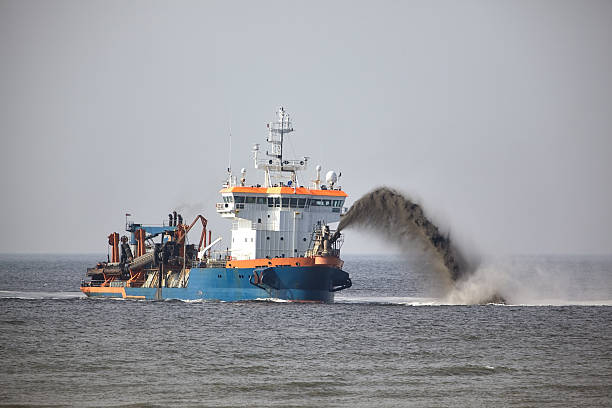
O-rings in the dredging industry are heavily exposed to slurry consisting of water, sand and silt. These particles can enter between the seal and the metal surface and cause abrasive wear. When this happens, grooves form that reduce the reliability of the seal. In areas where slurry flows past at high speed, material selection remains decisive for service life. An O-ring for abrasive slurry must provide sufficient resistance to this harsh medium and retain its shape under prolonged compression. Positioning the sealing surface so that direct flow is limited helps O-rings in the dredging industry remain in good condition for longer.
Pressure, pulsations and extrusion risk
Pressure conditions in dredging installations vary continuously. O-rings in the dredging industry are exposed to peaks when the pump starts or when larger particles move through the pipeline. A seal that is too soft can be forced into the clearance, causing extrusion. This process causes small shear defects that can eventually lead to complete leakage. The O-ring remains stable when harder materials or a PTFE back-up ring are used. Groove tolerances play an important role because the seal must receive sufficient support. Following these technical principles helps O-rings in the dredging industry continue to perform reliably.
Material selection for O-rings in the dredging industry
EPDM O-ring for dredging pipelines
An EPDM O-ring is used where water, salt and weather exposure are present. This material is resistant to UV and ozone, allowing O-rings in the dredging industry that are exposed to outdoor conditions to remain elastic for a long time. Because EPDM is not resistant to oil, it is used exclusively on the water side of pumps and pipelines. In flange connections and couplings, this rubber material provides a durable seal, even when a pipeline section twists or vibrates slightly. Its good temperature resistance allows an EPDM seal to maintain its function under varying conditions on deck or above water.
NBR O-ring for dredging hydraulics
An NBR O-ring is ideal when the seal comes into contact with oil. O-rings in the dredging industry are subjected to intensive loads in hydraulic cylinders and valves, making oil resistance and pressure resistance essential. NBR retains its shape at typical oil temperatures and prevents installations from losing capacity due to leakage. Because this material has limited UV resistance, NBR is mainly used in internal components. In hydraulic blocks, couplings and pump sections, NBR provides a reliable choice that supports the continuity of the dredging system.
HNBR O-rings under high pressure
HNBR O-rings for high pressure perform better when operating conditions become more demanding. In installations where pressure and temperature exceed the comfortable operating range of NBR, HNBR provides a greater safety margin. O-rings in the dredging industry that are exposed to intensive loads benefit from the higher mechanical strength and improved ageing resistance of this material. HNBR provides a longer service life and stable sealing performance, particularly in hydraulic areas where the rod seal is additionally affected by the ambient temperature.
FKM Viton O-ring in the slurry pump
An FKM Viton O-ring is used when the seal is exposed to higher temperatures or combined media. Friction generates heat in mechanical seals, which requires a heat-resistant material. O-rings in the dredging industry that come into contact with fuel residues, synthetic oil or chemicals also benefit from the broad compatibility of FKM. This property makes the material suitable for critical areas where reliability is essential.
Polyurethane O-ring for valve seals
A polyurethane O-ring for valve seals is selected for areas subject to extreme wear. Valves in dredging pipelines must withstand flows of sand and pressure fluctuations, requiring a highly robust seal. Polyurethane has high tear strength and remains stable under prolonged loads. As a result, O-rings in the dredging industry remain functional for longer in these applications than many traditional rubber materials.
Material overview table
|
Material |
Property |
Typical application |
|
EPDM |
Weather-resistant and water-resistant |
Flange connections and pipelines |
|
NBR |
Oil-resistant and pressure-resistant |
Hydraulics and pump housings |
|
HNBR |
High strength and improved heat resistance |
Heavy-duty hydraulics |
|
FKM |
Heat-resistant and suitable for a broad range of chemicals |
Mechanical seals and slurry pumps |
|
PU |
Highly wear-resistant |
Valve seals and abrasive areas |
Applications of O-rings in pumps, pipelines and hydraulics
O-ring for abrasive slurry
In slurry pumps, the seal is positioned strategically to limit direct contact with the slurry. Nevertheless, O-rings in the dredging industry remain vulnerable in this area when the material is not adequately matched to the medium. EPDM performs well on the water side, while NBR or HNBR is suitable on the oil side. FKM can be used for combined media or thermal loads. Selecting the correct material for each side keeps pumps leak-tight and increases service life.
Hydraulic cylinders and valves
Hydraulic components are responsible for many of the movements on board. The O-rings in these components must withstand friction, pressure and temperature variations. NBR is standard when oil is the medium, while HNBR is used for higher loads. During intensive use, valves and manifold systems experience temperature increases that may justify using a material such as FKM. Timely maintenance keeps performance stable and prevents costly downtime. Properly performed O-ring maintenance contributes directly to this.
FAQ
The combination of sand, water and pressure makes the environment extremely demanding. These factors cause erosion and deformation, which makes regular inspection important.
EPDM is ideal for outdoor applications because it offers excellent resistance to salt, UV and ozone.
HNBR is used when pressure and temperature are higher or when a longer service life is required.
FKM offers broad compatibility, but for pure water EPDM is often more effective.
This is often due to an incorrect material selection or insufficient groove support, which leads to extrusion.